

Aileen Carol Wuornos: When trauma breeds violence

Content Warning: This article discusses child abuse, sexual violence, and murder.
Semi-realistic photos created with artificial intelligence.Hi beauties,
Hi beauties,
Today's topic is about Aileen Carol Wuornos (/ˈwɔːrnoʊs/; born Pittman; February 29, 1956 – October 9, 2002), who was an American serial killer.
This article aims to explore Wuornos' criminal life, which was likely caused by her traumatic experiences. I hope you'll enjoy this post!

Here you can find a brief table containing the most important facts about Wuornos.
Born | Aileen Carol Pittman February 29, 1956[1] Rochester, Michigan, U.S. |
Died | October 9, 2002 (aged 46), Florida State Prison, Florida, U.S. |
Cause of death | Execution by lethal injection |
Other names | Lee Blahovec |
Born | Aileen Carol Pittman February 29, 1956[1] Rochester, Michigan, U.S. |
Died | October 9, 2002 (aged 46), Florida State Prison, Florida, U.S. |
Cause of death | Execution by lethal injection |
Other names | Lee Blahovec |
| Sandra Kretsch |
| Susan Lynn Blahovec |
| Cammie Marsh Greene |
| Lori Kristine Grody |
Spouse | Lewis Gratz Fell (m. 1976; ann. 1976) |
Partner | Tyria Moore (1986–1991) |
| Sandra Kretsch |
| Susan Lynn Blahovec |
| Cammie Marsh Greene |
| Lori Kristine Grody |
Spouse | Lewis Gratz Fell (m. 1976; ann. 1976) |
Introduction
On October 9, 2002, Aileen Carol Wuornos (/ˈeɪliːn ˈwɔːrnoʊs/) was executed by lethal injection in Florida, marking the end of one of America's most troubling criminal cases.
Between 1989 and 1990, she murdered seven men along Florida's highways, earning her place as one of the nation's most infamous female serial killers. Yet her story is far more complex than a simple tale of evil—it's a devastating chronicle of how severe childhood trauma, untreated mental illness, and systemic failures can converge to create catastrophic violence.
Wuornos's life forces us to confront uncomfortable questions about the relationship between victimhood and violence, the role of mental health in criminal behaviour, and society's responsibility toward its most vulnerable members. Her case remains relevant today, not merely as a true-crime fascination but as a stark illustration of preventable tragedy.
FBI profiler Robert Ressler (/ˈrɛslər/), who coined the term "serial killer," noted how unusual she was among female offenders—she killed strangers in face-to-face confrontations using traditionally masculine methods, breaking the mould of typical female serial killers who target intimate partners or dependents.
Part I: A life marked by abandonment and abuse
Born into chaos (1956-1960)
Aileen Carol Wuornos entered the world on February 29, 1956—a leap-year baby born in Rochester, Michigan.
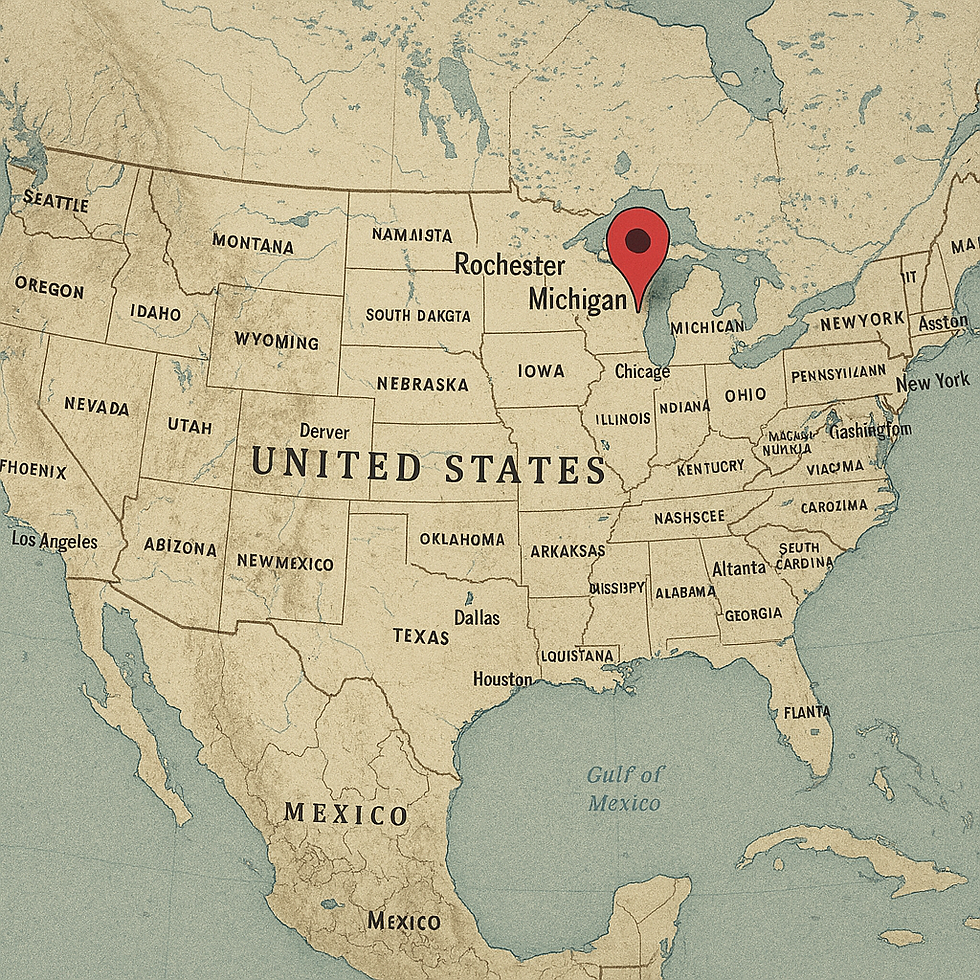
From her first breath, chaos surrounded her. Her mother, Diane, was only 14 years old when she married 18-year-old Leo Pittman in 1954. The marriage disintegrated before Aileen's birth, and at just 16, Diane gave birth to her daughter. Aileen would never meet her father, a man whose shadow would loom ominously over her life. Leo Pittman was later imprisoned for life in 1967 for kidnapping and raping a child. He was diagnosed with schizophrenia—a dark hereditary echo that would manifest in his daughter's own mental health struggles.
In January 1960, when Aileen was not yet four years old, her mother made a decision that would shape the trajectory of her daughter's entire life: she abandoned her children. Aileen and her brother, Keith, were left with their maternal grandparents, Lauri and Britta Wuornos, both Finnish Americans who struggled with severe alcoholism. The couple legally adopted the children in March 1960, but what should have been a sanctuary became another chamber of horrors.
The nightmare behind closed doors

Life in the Wuornos' household was a study in brutality. Young Aileen endured horrific abuse at the hands of her grandfather—the very person who should have protected her. Lauri Wuornos was sexually assaulted and beaten repeatedly, forcing her to undress before administering beatings. These experiences of violation and powerlessness would leave permanent psychological scars, fundamentally altering how she viewed herself, relationships, and the world around her.
The abuse shattered Aileen's developmental trajectory. By age eleven, she had already learned that her body was currency in a cruel marketplace: at school, she began trading sexual activities for cigarettes, drugs, and food - a heartbreaking demonstration of how abuse had warped her understanding of human connection and self-worth. Even more disturbingly, she engaged in sexual activities with her brother Keith, a pattern that speaks to the profound dysfunction within the household.
Teenage trauma and homelessness (1967-1971)
At fourteen, Aileen's nightmare intensified when a family friend raped her, resulting in pregnancy. Imagine the terror of a fourteen-year-old girl, already traumatised by years of abuse, facing pregnancy alone. On March 23, 1971, she gave birth to a son at a home for unwed mothers. The baby was immediately placed for adoption—another loss, another abandonment in a life already defined by them.
The months that followed brought cascading devastation. Her grandmother died of liver failure, removing one of the few adult presences in her life. Shortly after, she dropped out of school. Then, at fifteen, her grandfather threw her out of the house entirely. Aileen found herself living in the woods near her former home—not as an adventure, but as a desperate fight for survival.

To survive the Michigan winters and feed herself, fifteen-year-old Aileen turned to prostitution. This wasn't a choice born of agency or opportunity, but of absolute desperation. The woods became her home, the streets her workplace, and her body the only resource she possessed. This period marked the beginning of a life lived entirely on society's margins, where violence and exploitation were constant companions.
Early Criminal Activity and a Failed Marriage (1974-1986)
By age eighteen, Aileen's life had become a cycle of arrests and instability. In May 1974, she faced her first arrest in Jefferson County, Colorado, for DUI, disorderly conduct, and firing a pistol from a moving vehicle. She failed to appear for her court date—a pattern of running that would characterise much of her life.
In 1976, at age twenty, Aileen made her way to Florida and entered a bizarre marriage with Lewis Gratz Fell, a 69-year-old yacht club president. Their union was notable enough to make the society pages, but the marriage descended into chaos within weeks. Wuornos's violent behaviour—hitting Fell with his own cane, getting into bar fights—led to a restraining order. The marriage lasted only nine weeks before being annulled, another relationship destroyed by her inability to maintain stability.
That same summer, after returning to Michigan, she was arrested for assaulting a bartender with a cue ball. When her brother Keith died of oesophageal cancer in July 1976, she inherited $10,000—money that could have been transformative. Instead, she quickly squandered it on luxuries, including a car she soon wrecked. The pattern was clear: Aileen possessed no ability to plan for the future, to make decisions that served her long-term interests, or to escape the gravitational pull of self-destruction.
Between the ages of fourteen and twenty-two, Wuornos attempted suicide six times, including shooting herself in the stomach in 1978. These weren't mere cries for help—they were desperate attempts to escape a psychological pain that felt unbearable. The following years saw escalating criminal behaviour: armed robbery of a convenience store in 1981, forging checks in 1984, and multiple incidents involving weapons and stolen vehicles. Each arrest was a missed opportunity to intervene, to recognise that this young woman needed help, not just punishment.
Meeting Tyria Moore: A glimpse of connection (1986)
In 1986, something remarkable happened in Aileen's chaotic life. At a Daytona Beach gay bar called Zodiac, thirty-year-old Aileen met Tyria Moore, a twenty-four-year-old motel maid. Their connection was immediate and intense. For perhaps the first time in her life, Aileen experienced what she later described during her trial as love "beyond imaginable." They moved in together, with Aileen supporting them both through prostitution.

Even this relationship, however, existed on a knife-edge. In 1987, they were detained together for an alleged assault with a beer bottle. The relationship that should have been Aileen's salvation instead became entangled with her dangerous lifestyle and deteriorating mental state. Yet Aileen's feelings for Moore remained profound. Even from death row, facing execution, she proclaimed her enduring love for the woman who would ultimately help secure her conviction.
Part II: Twelve Months of Murder
Crossing the Line
On November 30, 1989, Aileen Wuornos crossed a line from which there would be no return. Her first victim was Richard Charles Mallory (/ˈmæləri/), a 51-year-old electronics store owner from Clearwater, Florida. Wuornos shot him multiple times with a .22 caliber pistol, later claiming self-defense after he allegedly raped, beat, and sodomized her during their encounter. His body was discovered in a wooded area on December 13th, with two fatal bullets lodged in his left lung.
What makes the Mallory case particularly complex is that he did have a prior conviction for attempted rape in Maryland, where he had spent eight years in treatment and was noted to have "strong sociopathic trends." Records obtained from the correctional institution showed that from 1958 to 1962, Mallory was committed for treatment and observation resulting from a criminal charge of assault with intent to rape. In 1961, it was observed that he possessed strong sociopathic trends.
However, this crucial detail would never reach the jury during Wuornos's trial—the judge refused to allow the records to be admitted as evidence and denied Wuornos's request for a retrial. Was her first killing genuinely self-defense against a dangerous predator? Or was it the beginning of a calculated pattern? The truth may lie somewhere in the murky space between.
A Year of Blood on Florida's Highways
The murders continued with disturbing frequency throughout 1990, revealing a pattern that would ultimately lead to Wuornos's capture.
David Andrew Spears (/spɪərz/), a 47-year-old construction worker from Winter Garden, was declared missing as of May 19, 1990. On June 1st, his naked body was found along US Highway 19 in Citrus County, riddled with six gunshot wounds from a .22 pistol.
Charles Edmund Carskaddon (/ˈkɑːrskædən/), a 40-year-old part-time rodeo worker, was killed on May 31, 1990. His body was discovered on June 6th in Pasco County, shot nine times with a .22 caliber weapon. The body had been wrapped in an electric blanket and was badly decomposed when found. Witnesses saw Wuornos in possession of Carskaddon's car, and she had pawned a gun identified as belonging to him.
Peter Abraham Siems (/siːmz/), a 65-year-old retired merchant seaman, vanished in June 1990 while traveling from Jupiter, Florida, to Arkansas to visit relatives. Though his body was never found, his car was discovered abandoned in Orange Springs on July 4th. Witnesses reported seeing Wuornos and Tyria Moore abandoning the vehicle, and investigators found Wuornos's handprint on the car's interior door handle—a crucial piece of evidence that would prove instrumental in her capture.
Troy Eugene Burress (/ˈbʌrɪs/), a 50-year-old sausage salesman from Ocala, was reported missing on July 31st. His body was found on August 4th in a wooded area along State Road 19 in Marion County, shot twice.
Charles Richard "Dick" Humphreys (/ˈhʌmfriz/), a 56-year-old retired United States Air Force major, former state child abuse investigator, and former Chief of Police, was killed on September 11, 1990. His body was discovered the next day in Marion County, fully clothed and shot seven times in the head and torso. The irony of his profession as a child abuse investigator, given Wuornos's own history, adds a tragic dimension to his death. His car was found in Suwannee County.
Walter Gino Antonio (/ænˈtoʊnioʊ/), a 61-year-old trucker, security guard, and reserve police officer, was killed on November 19, 1990. His nearly naked body was found near a remote logging road in Dixie County with four gunshot wounds. Five days later, his car was found in Brevard County.
Methodical Violence with Signs of Rage
Within just twelve months, Wuornos had claimed seven lives. Each victim shared a similar profile: middle-aged or older men between 40 and 65, motorists who solicited sex from a woman they likely perceived as vulnerable. Wuornos's method was consistent—she would engage them for sexual services, then shoot them with her .22 caliber pistol, robbing them of their possessions and vehicles.
The violence was methodical yet also revealed signs of rage—multiple gunshot wounds, overkill that suggested more than simple robbery was at play. Some victims had been shot as many as nine times, indicating a level of fury that transcended mere financial motivation.
Love Becomes Betrayal
The unraveling began with a car accident. On July 4, 1990, Wuornos and Moore crashed Peter Siems's car and abandoned it. A witness, Rhonda Bailey (/ˈrɒndə ˈbeɪli/), provided police with detailed descriptions of the two women, sparking a media campaign to identify them. Investigators meticulously pieced together evidence, tracking items sold from the victims' belongings at pawnshops. A crucial fingerprint on a pawnshop receipt matched one found in Siems's car, and Wuornos's prints were already in Florida's criminal database from her previous arrests.
On January 9, 1991, police arrested Wuornos at The Last Resort biker bar in Volusia County, using an outstanding warrant issued under the alias Lori Grody (/ˈlɔːri ˈɡroʊdi/). They located Moore the next day in Pittston, Pennsylvania. In a move that would prove decisive, Moore agreed to help secure a confession in exchange for immunity from prosecution.
Under police guidance, Moore returned to Florida and was put up in a motel. She made several phone calls to Wuornos, pleading for help in clearing her own name. The strategy worked devastatingly well. The woman Wuornos loved "beyond imaginable" became the instrument of her downfall. On January 16, 1991—three days after the calls began—Wuornos confessed to the murders, initially claiming she acted in self-defense against attempted rapes.
In an unusual turn, a 44-year-old woman named Arlene Pralle (/ɑːrˈliːn ˈprɔːl/) legally adopted Wuornos in November 1991 after seeing her photo in a newspaper, despite having no previous contact or relation with her. This bizarre development added another layer of complexity to an already extraordinary case.
From Self-Defense to 'I'd Do It Again
Legal proceedings commenced on January 14, 1992, with the trial for Richard Charles Mallory's murder. Florida's Williams Rule allowed prosecutors to present evidence of her other crimes to show a pattern of illegal activity—a powerful prosecutorial tool. Tyria Moore's testimony proved instrumental in securing a conviction on January 27th.
Despite defense psychiatrists diagnosing Wuornos with borderline and antisocial personality disorders and testifying that she was mentally unstable, she was sentenced to death four days later on January 31st. The judge's refusal to admit evidence of Mallory's previous rape conviction remains one of the most controversial aspects of the case.
By March 31, 1992, Wuornos pleaded no contest to three more murders—those of Charles Richard Humphreys, Troy Eugene Burress, and David Andrew Spears—stating her desire to "get right with God." Her story had shifted dramatically from her initial confession. She admitted that while Mallory had violently raped her, the other victims had not, though she cryptically suggested they "began to start to." On May 15, 1992, she received three more death sentences.
In June 1992, Wuornos pleaded guilty to the murder of Charles Edmund Carskaddon, receiving her fifth death sentence in November. In February 1993, she pleaded guilty to the murder of Walter Gino Antonio and was sentenced to death again. No charges were brought against her for the murder of Peter Abraham Siems, as his body was never found. In all, Wuornos received six death sentences.
Throughout this process, Wuornos told several inconsistent stories about the killings. During an interview with documentarian Nick Broomfield (/ˈbruːmfiːld/), when she thought the cameras were off, she told him that it was, in fact, self-defense, but she could not stand being on death row—where she had been for ten years at that point—and wanted to die.


Comments